
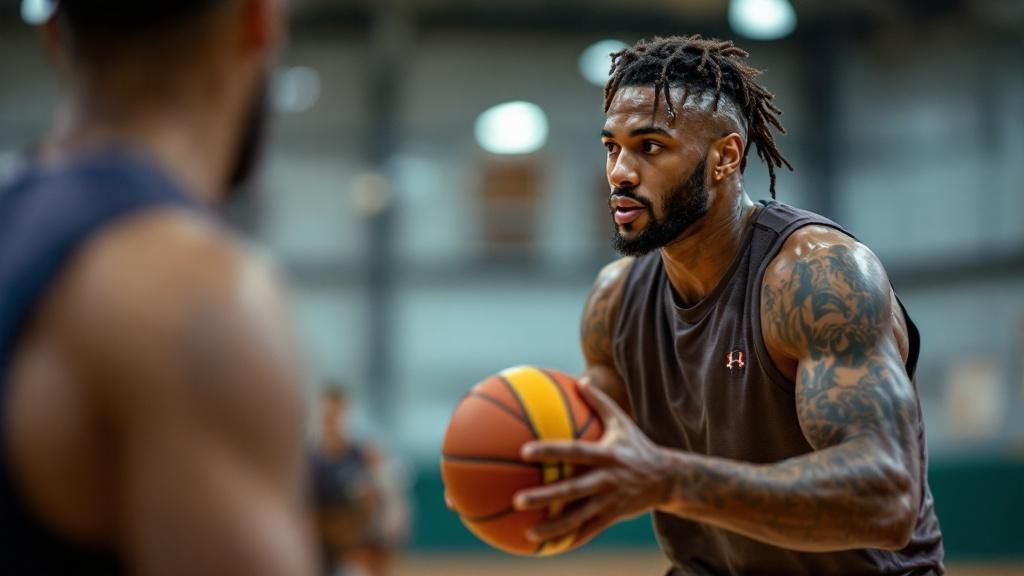
In an unprecedented partnership spanning continents, elite NBA players are unveiling their most guarded training methodologies to basketball academies across Europe, substantially reshaping player development across the Atlantic. This pioneering project sees top American basketball talent imparting state-of-the-art training protocols, strategic advances, and psychological training methods with the continent’s most promising young talent. Explore how this cultural exchange is reshaping European basketball, improving competitive benchmarks, and opening new possibilities for emerging players of worldwide competitors.
Top-tier American Training Approaches Transform Development in Europe
The integration of NBA instructional techniques into European academies marks a fundamental change in basketball development philosophy. American coaches stress personalised coaching systems designed for each player’s individual capabilities and limitations, standing apart from traditional European approaches that often prioritise group-based tactical frameworks. This customised approach has proven notably impactful, enabling European athletes to acquire more diverse technical abilities whilst maintaining the defensive rigour and tactical awareness European basketball is recognised for.
European basketball administrators have acknowledged the significant value in adopting these American developments, establishing formal collaborations with NBA franchises and their coaching personnel. These partnerships enable consistent information sharing through training clinics, film review sessions, and direct mentorship programmes. The outcome is a hybrid development model that synthesises American technical excellence with European foundational approaches, creating a comprehensive training environment that prepares young European players for competitive play at the highest levels.
Strength and Performance Innovations
NBA strength training programmes utilise sophisticated biomechanical assessment and data-informed strategies that have revolutionised how European academies manage athletic progression. American coaches utilise sophisticated periodisation strategies, combining discipline-specific strength work with injury mitigation strategies that significantly reduce player downtime. European facilities are actively allocating funds in advanced technological solutions, including force measurement systems and movement tracking systems, allowing practitioners to calibrate workout demands and monitor athlete progress with exceptional detail.
The emphasis on power generation and functional mobility has particularly impressed European coaching personnel, as these factors directly enhance on-court execution during intense competitive play. NBA fitness specialists recommend ongoing strength and conditioning rather than seasonal approaches, guaranteeing players maintain peak physical condition throughout extended competitive calendars. European development programmes have embraced this philosophy, establishing ongoing assessment frameworks and personalised recovery protocols that mirror professional standards, markedly advancing athlete durability and sustained professional lifespan.
Advanced Skill Development Approaches
American coaches focus on match-authentic skill training, stressing making decisions under pressure and reading the game combined with technical proficiency. NBA training sessions feature high-intensity drills that replicate real game scenarios, demanding players to deliver complicated techniques whilst tired and under pressure. European academies have adopted these rigorous training methods, moving beyond standard drill-focused training to dynamic game-tempo situations that more effectively prepare athletes for the demands of professional sport and competitive pressure.
The American method to three-point shooting progression has particularly transformed European basketball, with academies introducing specialised programmes focusing on range, consistency, and shot selection. NBA coaches highlight shooting mechanics refinement through film review and biomechanical feedback, allowing players to build dependable three-point proficiency. Additionally, American mentors advocate offensive versatility and ball-handling skills for all positions, substantially transforming positional definitions in European basketball and creating highly versatile, multifaceted players able to flourishing within modern professional environments.
Cross-Cultural Engagement and International Collaboration
The collaboration between NBA professionals and European academies constitutes far more than a simple knowledge transfer; it embodies a authentic mutual dialogue that enriches both parties involved. American coaches and players offer unique approaches rooted in the NBA’s competitive ethos, whilst European institutions provide time-honoured traditions stressing technical fundamentals and strategic complexity. This reciprocal relationship fosters shared appreciation and insight, allowing athletes from different continents to recognise diverse methods to basketball excellence. The integrated approach creates a genuinely worldwide viewpoint on athlete progression.
International cooperation has driven unprecedented networking opportunities within European basketball circles. Young athletes obtain significant exposure to NBA-level coaching, whilst simultaneously forging relationships with elite coaching figures and scouts. These relationships often go beyond the training pitch, covering development initiatives and continuous career support. Furthermore, European academies now draw greater investment and sponsorship, strengthening their infrastructure considerably. This cooperative structure demonstrates how cross-cultural partnerships can enhance sporting ecosystems, positioning European basketball as a credible contender on the global stage.
Future Prospects for Basketball in Europe Achievement
The collaboration between NBA stars and European academies has built a strong foundation for ongoing excellence in continental basketball. Young European players now gain access to premier coaching methodologies previously accessible only to leading American programmes. This exchange of expertise promises to speed up player development significantly, conceivably producing European athletes able to compete at the elite global levels. The partnerships create lasting relationships between institutions, securing continued mentorship and resource sharing for years to come.
Looking ahead, European basketball academies are positioned to become globally competitive talent incubators. The incorporation of NBA training secrets has improved coaching standards and player expectations throughout the continent. Within the next decade, we expect increased European representation in professional leagues worldwide, improved performance at international competitions, and a bolstered basketball culture across Europe. This collaborative programme ultimately advantages the sport globally, cultivating greater competitiveness and mutual respect amongst basketball communities.
